
The Origins of the Harsen Family Surname
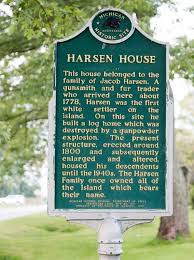
The Evolution of the Harsen Name: From the Hassing Line of Hesse to New Amsterdam
Introduction
The Harsen surname—best known today through Harsen’s Island in Michigan—has ancient European roots stretching back more than a millennium. The name evolved from Hassing, a Hessian-Frankish patronymic, to Harsen, a Dutch colonial surname born in New Amsterdam.
This linguistic journey mirrors Europe’s own transformation—from the forests of the ancient Catti tribe to the Reformed churches of the Netherlands, and finally across the Atlantic to the colonies of North America.
Ancient Roots: The Catti and the Frankish Foundation
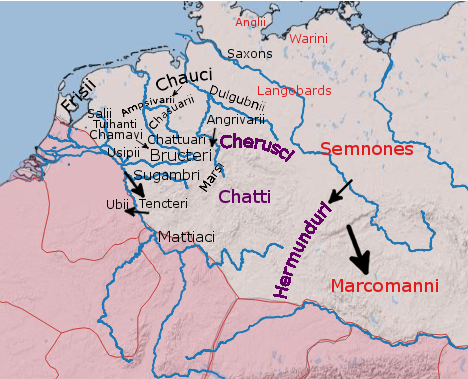
The earliest ancestors of the name came from the Catti (Chatti), a disciplined and martial tribe living in what is now Hessen (Hesse), Germany, described by Tacitus in the first century CE as “a brave and steadfast people of the interior” [1].
By the 5th century CE, the Catti had merged with other western Germanic groups to form part of the Frankish Confederation, which gave rise to the Merovingian and Carolingian dynasties. Thus, Hesse became an early Frankish heartland, and its inhabitants were ethnic Franks—the same people who would later form both the French and Dutch nations [2][3].
From this region came the personal name Hasso, meaning “strong” or “hardy” in Old High German [4]. Its patronymic form, Hassing, meant “descendants of Hasso” [5]. This name persisted through medieval Hesse and the Rhineland as a symbol of Frankish lineage.
Migration to the Low Countries: Hessian Franks Become Dutch
By the late Middle Ages, families from Hesse and the Rhineland migrated north and west into the Low Countries, drawn by religious freedom and trade opportunities. The Dutch, descended from the Low Frankish branch of the Franks, were kin to these Hessian migrants in both blood and language [6][7].
Records from the Dutch Reformed Church mention a Rev. Warnardus Hassing, the progenitor of the later Harsen family, active in ecclesiastical circles in the seventeenth century [8].
As the Dutch language standardized, the -ing suffix—common in German and Frisian—was often replaced with the Dutch -sen ending, producing forms like Harsen, Harsin, and Harsing [9]. This shift reflects how Hessian Franks were linguistically absorbed into the Dutch Reformed world.
New Amsterdam: The Harsen Name is Born
The final transformation from Hassing to Harsen occurred in New Amsterdam (modern New York City) during the mid-1600s.
The son of Rev. Warnardus Hassing, adapting to Dutch colonial orthography, began using Harsen in official and church records. Two important conventions drove this change:
- Dutch Patronymic Style: New Netherland colonists commonly used -sen endings (e.g., Jansen, Hendricksen) to mean “son of.”
- Significance of “G” and “H” Additions: In 17th-century Dutch, educated and clerical families often added a final “g” or “h” (e.g., Harseng, Harsenh) to signal literacy, heritage, or social status [10].
These ornamental endings were part of early-modern Dutch spelling conventions—similar to Hassingh or Van Rensselaerh—and were often dropped when English clerks replaced Dutch recordkeepers after 1664 [11].
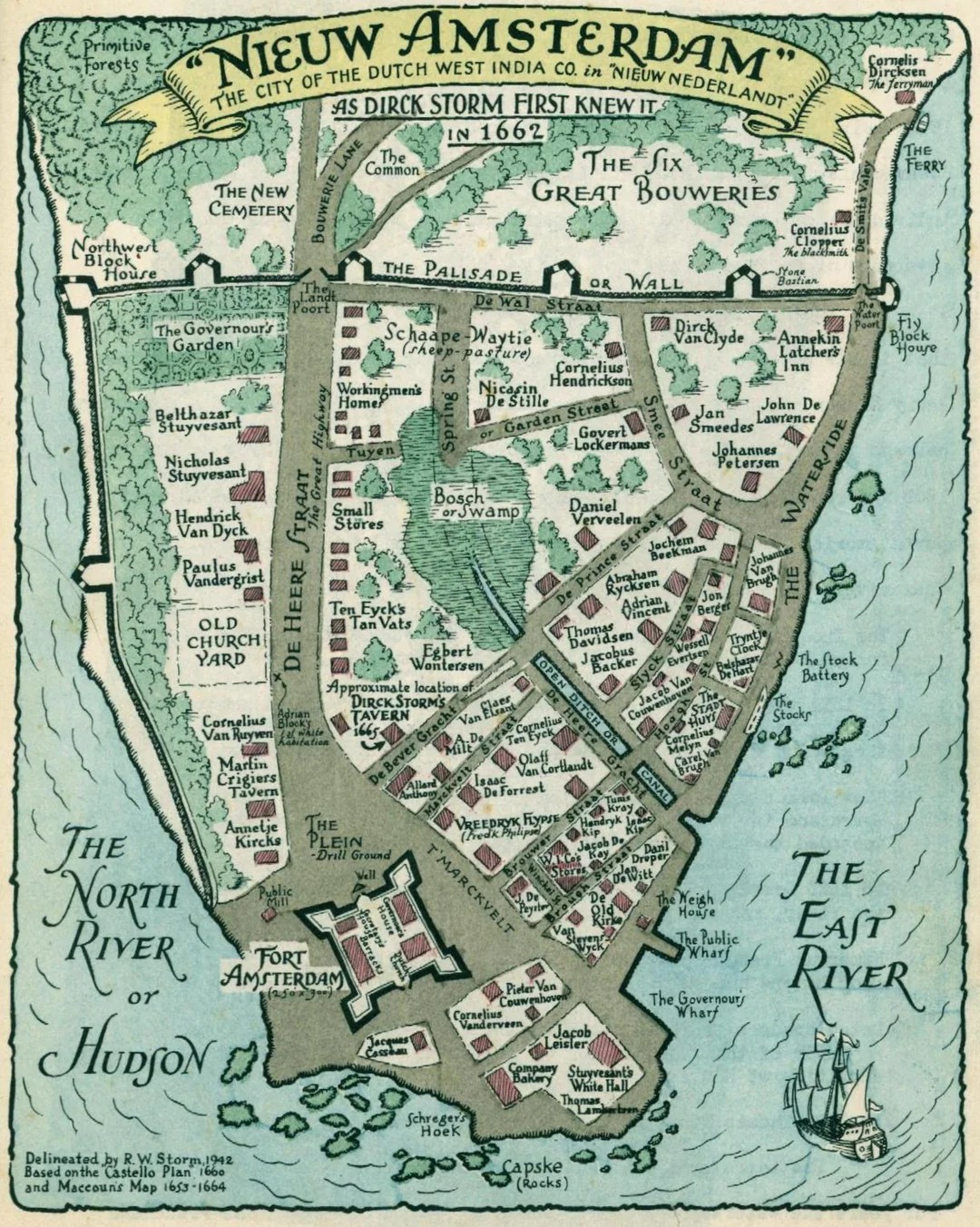
By the 1670s, Harsen, Harsin, and Harseng all appear interchangeably in New Amsterdam and Albany Reformed Church records [12], establishing the permanent Dutch-American form.
The Linguistic Anatomy of “Harsen”
The structure of the name reflects its journey:
| Component | Origin | Meaning |
|---|---|---|
| Har(s)- | Old High German / Dutch | From Hasso or harz, “strong” or “forest resin” |
| -sen | Dutch patronymic suffix | “Sons of” or “descendants of” |
| Variants: | — | Harsing, Harsin, Harseng, Harsenh |
Thus, Harsen literally means “sons of Hars”—a linguistic fossil of an ancient Frankish name reinterpreted through Dutch grammar.
| Era | Region | Cultural Identity | Surname Form | Meaning |
|---|---|---|---|---|
| 1st–5th c. CE | Hesse (Chattia) | Catti → Early Franks | — | Tribal lineage |
| 6th–12th c. | Frankish Hesse | Merovingian / Carolingian | Hasso / Hassing | “Descendants of Hasso” |
| 13th–16th c. | Low Countries | Dutch Low Franconian | Hassing / Harsing | German-Dutch hybrid |
| 17th c. | New Amsterdam | Dutch Colonial | Harsen / Harseng / Harsenh | Patronymic Dutch-American form |
Each phase of this evolution captures a linguistic echo of Europe’s deep migrations—the Franks, the Dutch, and the New World settlers who would become the Harsen family of North America.
Endurance and Meaning
The Harsen surname carries the legacy of:
- Hessian-Frankish ancestry — ancient strength from the heart of Europe.
- Dutch Reformed refinement — linguistic and religious transformation.
- Colonial permanence — integration and identity in the early Americas.
The occasional “Harseng” or “Harsenh” spelling found in colonial records was not random—it was an intentional marker of education, social distinction, or heritage among Dutch New World families.
Conclusion
From Hesse’s Frankish forests to Holland’s merchant ports, from Amsterdam’s pulpits to New Amsterdam’s records, the Harsen name embodies the endurance of Europe’s oldest identities.
When that son of Rev. Warnardus Hassing altered the family name—changing -ing to -sen and sometimes adding -g or -h—he preserved both ancestry and ambition.
The name Harsen today stands as a linguistic monument linking the Catti of ancient Hesse, the Franks of medieval Europe, the Dutch of the Reformation, and the settlers of early America.
References
- Tacitus, Germania, trans. J. B. Rives (Oxford: Oxford University Press, 1999), ch. 30–31.
- Edward James, The Franks (Oxford: Blackwell, 1988), pp. 41–55.
- Wolfgang Haubrichs, Ethnogenese und Siedlungsgeschichte der Chatten (Hessen) (Marburg: Philipps-Universität, 1985).
- Friedrich Kluge, Etymologisches Wörterbuch der deutschen Sprache, 24th ed. (Berlin: de Gruyter, 2002), s.v. “Hasso.”
- G. Krohne, Die Chatten und ihre Nachkommen (Kassel: Historischer Verein für Hessen, 1891).
- P. J. Blok, Geschiedenis van het Nederlandsche Volk, Vol. 3 (Amsterdam: Meulenhoff, 1914).
- Henri Pirenne, Histoire de la Civilisation Belge (Brussels: Maurice Lamertin, 1928), pp. 12–17.
- Dutch Reformed Archives, Utrecht, “Registers of the Classis of Amsterdam, 1650–1680,” entries for Warnardus Hassing.
- Nicoline van der Sijs, Nederlandse Familienamen: Herkomst en Betekenis (Utrecht: Spectrum, 2009), p. 204.
- J. Romeyn Brodhead, History of the State of New York, Vol. 1 (New York: Harper & Brothers, 1853), pp. 372–374.
- E. K. Grootes, Vroegmoderne Spelling en Status in de Nederlanden (Leiden: Brill, 1994), pp. 99–102.
- Early Albany Dutch Church Records, 1683–1710, New York State Archives.
- J. de Vries & W. de Boer, Nederlandse Achternamen in Historisch Perspectief (Leiden: Brill, 1997), pp. 88–90.
- Andreas’ History of St. Clair County, Michigan (Chicago: A. T. Andreas, 1883), pp. 402–403.
Disclaimer
This article is based on genealogical and historical research using public records, published sources, and archival materials. Every effort has been made to ensure accuracy; however, interpretations are the author’s own and subject to revision as new evidence emerges. Nothing in this post should be construed as a personal statement about any living individual. Readers are encouraged to consult primary sources and form their own conclusions.
 Harsen Family Blog
Leave a comment